

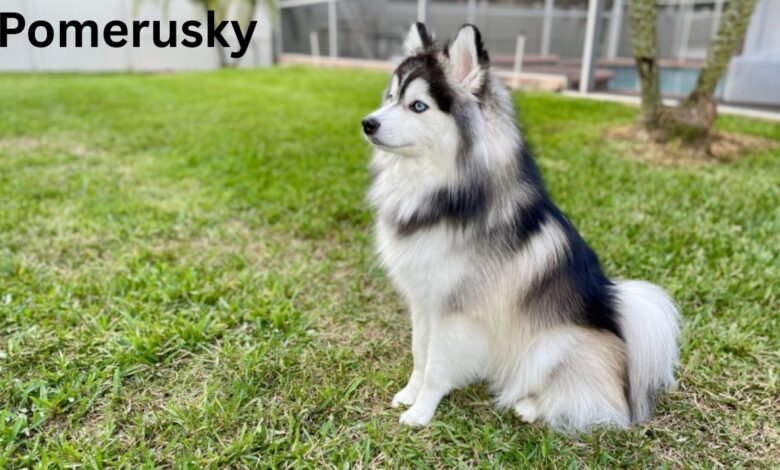
The Pomerusky is an attractive designer dog that combines characteristics of the Pomeranian and Siberian Husky. More commonly known as the Pomsky, this crossbreed has gained attention among dog lovers because of its fluffy coat, expressive eyes, playful personality, and appealing appearance. It may offer some of the recognizable features of a Siberian Husky in a smaller body, making it an interesting choice for people who want an active companion without owning a full-sized Husky. However, its attractive appearance is only one part of responsible dog ownership.
Before bringing a Pomerusky into your home, it is important to understand its advantages, disadvantages, exercise requirements, grooming needs, and potential health concerns. These dogs can be intelligent, affectionate, and entertaining, but their personalities and physical characteristics may differ considerably. Understanding both sides of ownership can help you decide whether this crossbreed fits your lifestyle and whether you can provide the care it needs throughout its life.
Quick Information Table
| Information | Details |
|---|---|
| Dog Name | Pomerusky |
| Common Name | Pomsky |
| Dog Type | Designer Crossbreed |
| Parent Breeds | Pomeranian and Siberian Husky |
| Origin | United States |
| Typical Adult Height | Approximately 10–18 inches |
| Typical Adult Weight | Approximately 12–35 pounds |
| Estimated Lifespan | Around 12–15 years |
| Temperament | Playful, intelligent, and affectionate |
| Coat Type | Usually thick and double-coated |
| Coat Colors | White, black, gray, cream, and brown |
| Exercise Needs | Moderate to high |
| Grooming Needs | Regular brushing |
| Training | Intelligent but potentially independent |
| Living Environment | Apartments or houses with adequate exercise |
Note: These figures are general estimates rather than guaranteed breed standards. Individual Pomeruskies may differ in size, appearance, temperament, and care requirements because they are crossbred dogs.
Understanding the Pomerusky
1. What Makes the Pomerusky Special?
The Pomerusky stands out because it combines two dog breeds with noticeably different physical characteristics and personalities. The Pomeranian contributes a compact body, fluffy appearance, and alert nature, while the Siberian Husky may contribute athletic features, distinctive facial markings, and an adventurous temperament. Since the Pomerusky is a crossbreed rather than a consistently standardized purebred dog, puppies from the same litter can look different. Some may inherit more characteristics from their Pomeranian parent, while others may resemble their Husky parent. Their adult size, coat texture, and personality cannot always be predicted accurately. This variation makes every dog unique, but potential owners should understand that appearance alone cannot determine whether a particular puppy will be a suitable companion.
Pros of Owning a Pomerusky
2. Attractive Appearance and Unique Features
One of the biggest advantages of owning a Pomerusky is its appealing appearance. Many have thick, fluffy coats, upright ears, expressive faces, and bushy tails. Their coloring can include combinations of white, black, gray, cream, and brown, depending on their inherited genetics. Some individuals may also have blue eyes, brown eyes, or two differently colored eyes. These features make the crossbreed particularly attractive to people who admire Siberian Huskies but prefer a smaller companion. However, not every Pomerusky develops the classic Husky facial markings or blue eyes. Coat patterns and facial features vary naturally. Responsible owners should prioritize good health, comfortable movement, and a stable temperament instead of choosing a puppy exclusively for fashionable physical characteristics.
3. Affectionate and Loyal Companionship
Pomeruskies can become loving companions when they receive appropriate attention, socialization, and care. Many enjoy spending time with their families, participating in household activities, and relaxing near familiar people. Their affectionate nature can make them enjoyable pets for individuals and families who want an interactive animal rather than a dog that remains isolated. They may also form strong relationships with their regular caregivers. Nevertheless, affection is not guaranteed by the crossbreed name alone. Genetics, early experiences, handling, and training all influence behavior. Owners should provide positive interactions, establish trust, and allow their dogs to develop confidence naturally. Understanding individual personality differences is essential for building a healthy relationship with this energetic and potentially affectionate companion.
4. Intelligent and Capable of Learning
Another positive characteristic of the Pomerusky is its intelligence. Both parent breeds are known for their ability to learn, although they may respond to training differently. Pomeranians can be responsive to rewards and enjoy learning tricks, while Siberian Huskies are intelligent but often independent thinkers. A Pomerusky may inherit a combination of these qualities, making training enjoyable but occasionally challenging. Basic commands such as sit, stay, come, and leave it can be introduced through short, rewarding sessions. Puzzle toys, interactive games, and simple obedience exercises can also provide mental stimulation. Consistency is particularly important because an intelligent dog can quickly develop unwanted habits when household rules are unclear. With patience and appropriate training methods, many Pomeruskies can become well-mannered family companions.
5. Adaptability to Different Living Environments
A Pomerusky may adapt to an apartment, townhouse, or larger family home when its daily needs are properly addressed. Some individuals can live comfortably in smaller spaces if they receive sufficient exercise, mental stimulation, and companionship. Indoor games, structured walks, and supervised outdoor activities can help maintain a healthy routine. However, apartment suitability should not be confused with low activity requirements. A bored or under-exercised Pomerusky may bark, become restless, or develop destructive habits. Owners should also consider noise levels, available outdoor spaces, and building regulations before choosing this dog. A secure home environment and a dependable daily routine are more important than simply having a large property. Proper planning can make different living arrangements suitable for the right individual dog.
6. Playful Personality and Family Entertainment
Pomeruskies can bring considerable energy and entertainment into a household. Many enjoy chasing toys, exploring their surroundings, learning new activities, and interacting with familiar people. Their playful behavior can make ordinary family activities more enjoyable and encourage owners to remain physically active. Families with older, responsible children may appreciate having a dog that enjoys supervised games and companionship. Early socialization can help puppies become comfortable around different people, environments, and other animals. However, children must learn to handle dogs gently, respect their resting time, and avoid pulling their ears or tails. Because individual temperaments differ, every interaction between a young child and a dog should be supervised by an adult. Teaching children appropriate behavior helps create a safer and more comfortable household.
Cons of Owning a Pomerusky
7. Regular Grooming and Heavy Shedding
One of the most noticeable disadvantages of owning a Pomerusky is its grooming requirement. Many inherit the dense double coat associated with their parent breeds, which can shed throughout the year and more heavily during seasonal coat changes. Regular brushing helps remove loose hair, reduce tangles, and maintain a healthier-looking coat. Owners may need suitable brushes, occasional professional grooming, and additional cleaning around the home. Neglecting coat maintenance can lead to uncomfortable mats, particularly behind the ears and in areas where friction occurs. This dog is therefore not an ideal choice for someone who wants a low-maintenance, low-shedding companion. Prospective owners should also understand that a Pomerusky is not considered hypoallergenic, so people with dog allergies should carefully consider this factor.
8. Exercise and Mental Stimulation Requirements
Although a Pomerusky may be smaller than a Siberian Husky, it can still inherit considerable energy and curiosity. Daily walks, playtime, training, and mentally engaging activities are important for maintaining its physical and behavioral well-being. Insufficient activity may contribute to excessive barking, chewing, digging, or other unwanted behaviors. The exact exercise requirement depends on the dog’s age, health, size, and individual energy level. Puppies should not be forced into strenuous exercise, while healthy adult dogs may enjoy longer walks and suitable outdoor adventures. Owners should provide a balanced routine that includes both physical movement and mental challenges. People who work long hours or prefer a largely inactive lifestyle should carefully consider whether they can meet this crossbreed’s potential activity requirements.
9. Training Can Require Patience
Intelligence does not automatically make a dog easy to train. A Pomerusky may inherit the Pomeranian’s alert nature and the Husky’s independent thinking, creating a companion that sometimes prefers doing things its own way. House-training, leash manners, recall, and controlling excessive barking may require consistent effort. Harsh punishment can damage trust and make learning more difficult. Reward-based training, clear boundaries, and early socialization are generally more effective approaches. Owners should begin teaching appropriate behavior during puppyhood and continue reinforcing it throughout adulthood. It is also important to introduce new experiences gradually so the dog can develop confidence. People expecting an obedient dog without investing time in training may find this crossbreed more demanding than anticipated.
10. Potential Health Concerns and Veterinary Expenses
Pomeruskies may inherit certain health conditions associated with their Pomeranian and Siberian Husky parents. Potential concerns include patellar luxation, hip problems, eye disorders, dental disease, and allergies. However, because the Pomsky is a relatively new crossbreed, comprehensive information about its long-term health patterns remains limited. These conditions should be considered possible inherited risks rather than problems that every Pomerusky will experience. Responsible breeders should provide health records and appropriate screening information for both parent dogs. Regular veterinary examinations, vaccinations, parasite prevention, dental care, and balanced nutrition are important for maintaining good health. Prospective owners should also prepare for unexpected veterinary expenses and consider suitable pet insurance. Choosing a responsible breeder and maintaining preventive healthcare can support a healthier and more comfortable life.
11. Possible Separation Anxiety and Vocal Behavior
Some Pomeruskies become strongly attached to their owners and may struggle when left alone for extended periods. Depending on inherited temperament and individual experiences, they may express distress through whining, barking, howling, or destructive behavior. Their vocal nature can also create difficulties in apartments or neighborhoods where excessive noise is a concern. Gradually teaching a puppy to remain comfortable alone can help prevent problems from developing. Owners should establish a predictable routine, provide appropriate toys, and avoid leaving the dog isolated for unnecessarily long periods. If signs of separation-related distress develop, a veterinarian or qualified behavior professional can help identify suitable solutions. A household where someone can provide regular companionship may be more suitable than one where the dog must spend most of the day alone.
12. Finding a Responsible Breeder Can Be Difficult
Another disadvantage is the importance of carefully researching breeders. The popularity of designer dogs can encourage irresponsible breeding practices, including selecting parent dogs mainly for appearance rather than health and temperament. A responsible breeder should explain the puppy’s parentage, discuss possible adult size variations, provide veterinary records, and answer questions about the parents. Buyers should avoid sellers who promise guaranteed blue eyes, a specific miniature size, or a particular personality without reliable evidence. It is also worth considering adoption through reputable rescue organizations. Taking time to investigate the source of a puppy can reduce the risk of supporting poor breeding practices and help families make a more informed decision. Responsible purchasing or adoption should always be based on the dog’s welfare rather than appearance alone.
Is a Pomerusky the Right Pet for You?
13. Who Should Consider Owning a Pomerusky?
A Pomerusky may suit people who enjoy active companionship, have time for training, and are comfortable with regular grooming. Families with older children, individuals who enjoy walking, and experienced dog owners may find this crossbreed rewarding. However, it may not be the best choice for people who frequently travel, dislike shedding, expect a completely quiet dog, or cannot provide consistent attention. First-time owners should research both parent breeds and consider speaking with a veterinarian or experienced trainer before making a decision. Financial preparation is equally important because food, grooming, preventive healthcare, and unexpected veterinary treatment all contribute to long-term ownership costs. The most important question is not whether a Pomerusky looks appealing, but whether its potential needs match the household’s everyday routine and resources.
Final Thoughts
The Pomerusky can be an affectionate, intelligent, playful, and visually appealing companion, but it also comes with responsibilities that should not be overlooked. Its grooming requirements, exercise needs, possible health concerns, and training challenges deserve careful consideration before adoption or purchase. Because this crossbreed can inherit different characteristics from its Pomeranian and Siberian Husky parents, no two individuals are necessarily alike.
Ultimately, the Pomerusky may be an excellent companion for a household prepared to provide consistent care, attention, and responsible training. Choosing a healthy, well-socialized dog from a responsible source is an important first step. When owners understand both the benefits and challenges, they can make a thoughtful decision and provide their dog with a comfortable and rewarding life.
Frequently Asked Questions (FAQs)
1. Is a Pomerusky a good family dog?
Yes, a Pomerusky can be a good family companion when properly trained and socialized. Many enjoy interacting with family members and participating in household activities. However, children should be taught to handle the dog gently, and interactions with younger children should always be supervised. Providing regular exercise, attention, and a comfortable environment can help the dog develop a positive relationship with its family.
2. How big does a Pomerusky get?
Adult Pomeruskies can vary considerably in size because their parent breeds have different body types. Many weigh approximately 12–35 pounds and may stand around 10–18 inches tall, although individual dogs can fall outside these estimates. Genetics, parent size, and breeding lines influence adult measurements. Prospective owners should ask breeders about the parents’ sizes but understand that exact adult measurements cannot be guaranteed.
3. Do Pomeruskies shed a lot?
Yes, many Pomeruskies shed regularly because they inherit a thick double coat. Shedding may become heavier during seasonal coat changes. Brushing several times a week, and more frequently during heavier shedding periods, can help manage loose hair and prevent tangles. Regular coat checks and appropriate grooming products also help maintain healthy skin and fur.
4. Are Pomeruskies easy to train?
Pomeruskies are intelligent and capable of learning commands, but their independent personalities can sometimes make training challenging. Early socialization, positive reinforcement, patience, and consistent routines help develop good behavior. Short training sessions are often more effective than lengthy lessons. Owners should also practice recall and leash manners regularly to encourage safer everyday behavior.
5. How long does a Pomerusky live?
A Pomerusky may live approximately 12–15 years, although lifespan varies according to genetics, healthcare, nutrition, and lifestyle. Regular veterinary checkups, appropriate exercise, dental care, and a balanced diet can support long-term health. Responsible breeding and early attention to potential health problems are also important factors in maintaining a good quality of life.