

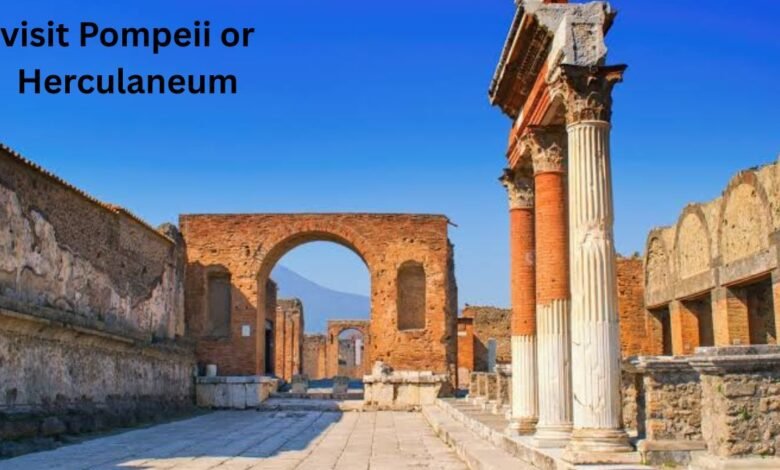
Planning to visit Pompeii or Herculaneum is an opportunity to experience two of Italy’s most remarkable archaeological destinations. Both ancient Roman towns were affected by the eruption of Mount Vesuvius in AD 79, but the volcanic deposits preserved them in different ways. Pompeii is much larger, allowing visitors to walk through streets, homes, shops, public buildings, and entertainment spaces. Herculaneum is smaller but is particularly impressive for its preserved houses, mosaics, wooden features, and architectural details. Understanding these differences before your trip can help you choose the site that fits your interests and schedule. With sensible planning, comfortable clothing, and enough time, either destination can become one of the most memorable parts of an Italian journey.
Quick Information Table
| Information | Pompeii | Herculaneum |
|---|---|---|
| Location | Near modern Pompeii | Modern Ercolano |
| Ancient settlement | Pompeii | Herculaneum |
| Major historical event | Vesuvius eruption, AD 79 | Vesuvius eruption, AD 79 |
| Site scale | Large | Smaller and more compact |
| Main attraction | Complete ancient city layout | Highly preserved buildings |
| Famous remains | Frescoes, mosaics, streets, villas | Mosaics, wood, houses, interiors |
| Suggested visit | 4–6 hours | 2–4 hours |
| Walking requirement | High | Moderate to high |
| Railway access | Pompeii-area stations | Ercolano Scavi |
| Ideal for | Exploring Roman city life | Detailed archaeological viewing |
| Weather concern | Heat and direct sun | Heat and direct sun |
| Recommended footwear | Comfortable walking shoes | Comfortable walking shoes |
| Water | Bring drinking water | Bring drinking water |
| Nearby experiences | Vesuvius and Pompeii town | Vesuvius and Naples area |
1. Understand the Difference Between the Two Sites
Before you visit Pompeii or Herculaneum, it helps to understand why the two destinations offer different experiences. Pompeii was a substantial Roman settlement with an extensive network of streets and buildings. Exploring it can feel like walking through the remains of an entire ancient town. Herculaneum was smaller, but its preservation provides extraordinary details inside individual buildings. The volcanic material that covered Herculaneum helped preserve materials that are less commonly found at archaeological sites, including some wooden elements. Pompeii is therefore useful for understanding the wider structure of Roman urban life, while Herculaneum can provide a closer look at domestic architecture and everyday surroundings.
2. Decide How Much Time You Have
If you plan to visit Pompeii or Herculaneum, your available time should influence which site you choose. Pompeii is large enough that a rushed visit can leave you tired while still feeling that you have missed important areas. Allowing four to six hours gives many visitors enough time to explore several major sections at a comfortable pace. Herculaneum generally requires less time because the archaeological area is smaller. A two-to-four-hour visit can provide a meaningful experience without taking up the entire day. If you have several days in the region, visiting both separately is a useful way to appreciate their differences rather than trying to fit everything into one hurried outing.
3. Choose a Convenient Travel Base
Naples is a practical base for travelers who want to explore archaeological sites around Mount Vesuvius. The city provides transportation connections toward both Pompeii and Herculaneum. Sorrento can also work well for visitors combining these sites with destinations on the Sorrento Peninsula or Amalfi Coast. When selecting accommodation, consider how easily you can reach a railway station and how your archaeological visit fits into the rest of your itinerary. Staying somewhere convenient for transportation can save valuable time, particularly if you plan to start early. You do not necessarily need a rental car to explore these destinations.
4. Plan Your Transportation
Transportation is an important part of the experience when you visit Pompeii or Herculaneum. Both archaeological sites can be reached from nearby cities by public transportation, including railway services. Herculaneum is commonly accessed through Ercolano Scavi station, from where the archaeological site can be reached on foot. Pompeii can also be reached by rail, with the most suitable station depending on your starting point and the entrance you plan to use. Train schedules and local transportation services can change, so check current information shortly before your journey. If you drive, allow additional time for traffic and parking, particularly during busy periods. Building some flexibility into your schedule is better than planning your arrival with only a few minutes to spare.
5. Check Tickets Before Traveling
Before you visit Pompeii or Herculaneum, check the latest ticket information published by the official archaeological site. Admission arrangements can change because of official policies, exhibitions, special events, and visitor-management measures. For Pompeii, current visitor rules include a daily limit on admissions and nominative tickets, so checking the latest requirements and using an official ticket channel can help you plan with greater confidence. Also confirm opening hours, available entrances, and whether particular areas require additional arrangements. Keep your ticket accessible during your visit and follow the entry instructions provided by site staff.
6. Choose the Right Time of Day
The Mediterranean climate can make archaeological sightseeing challenging during particularly hot periods. Much of the experience takes place outdoors, and shade may not always be available when you need it. Starting earlier in the day can provide more comfortable temperatures and may allow you to explore before the busiest period. Spring and autumn are often attractive seasons for outdoor sightseeing, although weather conditions can vary. If you are traveling during summer, check the forecast and prepare for strong sunlight. Regardless of the season, planning regular breaks can make a significant difference during a long archaeological walk.
7. Wear Comfortable Shoes
Comfortable footwear is especially important when you visit Pompeii or Herculaneum, because both archaeological sites involve walking across uneven surfaces. Ancient Roman streets can contain large stones, steps, slopes, and irregular pathways that are very different from modern sidewalks. Choose supportive shoes with a reliable grip rather than footwear that may become uncomfortable after several hours. Lightweight clothing is useful in warm weather, while an additional layer can help when temperatures become cooler. A hat and sun protection can also be valuable on bright days. Keep your day bag reasonably small and check the current rules regarding luggage before visiting.
8. Explore Pompeii at a Sensible Pace
Pompeii offers an extensive collection of streets, homes, public buildings, shops, gardens, religious structures, and entertainment spaces. Its scale is one of its greatest attractions, but it also means that trying to see everything can become overwhelming. Instead, identify several areas that interest you and create a realistic route. Look closely at surviving mosaics, wall paintings, building layouts, and street features because these details reveal how Roman residents used their surroundings. Some buildings may occasionally be unavailable because of conservation work, so keeping your itinerary flexible is important. The wider experience of walking through the ancient city is just as significant as individual landmarks.
9. Discover Herculaneum’s Distinct Character
Herculaneum provides a more compact archaeological experience. Its preserved buildings can offer fascinating details about Roman domestic life, including decorative surfaces, mosaics, courtyards, and structural features. The site can be particularly rewarding for visitors who enjoy examining individual buildings rather than covering a huge urban area. Take time to look at how rooms were arranged and decorated instead of simply moving from one attraction to another. Its smaller scale also makes it easier for travelers with limited time to explore a substantial portion of the archaeological area. However, uneven surfaces still mean that visitors should expect plenty of walking.
10. Consider a Guide or Audio Resource
Historical ruins can be much easier to understand when you have reliable information about what you are seeing. A professional guide can explain the purpose of buildings, Roman customs, architectural features, and what archaeologists have discovered at the sites. Independent travelers can also use visitor information or an audio guide where permitted. At Pompeii, visitors should follow the park’s current rules regarding audio guides, including its requirements for guides or audio-guide devices used inside the archaeological area. If you book a private guide, confirm the tour duration, meeting point, language, and what is included before paying. Good interpretation can turn an unfamiliar wall, room, or street into a meaningful part of the ancient city’s story.
11. Prepare for the Physical Demands
A visit to either archaeological site involves walking, and Pompeii can be particularly demanding because of its size. Even visitors who are accustomed to sightseeing may become tired after several hours on uneven ground. Carry drinking water, take regular breaks, and avoid scheduling too many physically demanding activities afterward. Travelers with mobility concerns should check the latest accessibility information before arriving, as designated routes and access arrangements can vary. Pompeii also provides a designated accessible route known as “Pompeii for All.” At Herculaneum, visitors should expect uneven surfaces and should wear comfortable, closed footwear. Planning around your own pace will make the experience more comfortable and enjoyable.
12. Respect the Ancient Remains
Pompeii and Herculaneum are protected archaeological sites containing fragile evidence of ancient life. Visitors should stay on designated paths, follow staff instructions, and avoid touching or climbing on structures. Removing stones, fragments, or archaeological material is inappropriate and can damage historical evidence. Photography rules may differ between areas, particularly around special exhibitions or restricted spaces, so follow the instructions displayed at the site. Respectful behavior contributes to conservation and allows future visitors to experience the remains. It also helps preserve the details that researchers continue to study.
13. Create a Realistic Itinerary
A successful trip should include enough time for transportation, entrance procedures, walking, refreshments, and unexpected delays. If Pompeii is your main destination, giving it several hours rather than trying to combine too many attractions will make the day more comfortable. Herculaneum’s smaller scale may provide greater flexibility for combining the visit with another nearby activity. If you want to include Mount Vesuvius, check its current access arrangements and transportation requirements separately. Most importantly, do not treat the two archaeological sites as interchangeable. Their different sizes and preservation make each one valuable in its own way.
Final Thoughts
Knowing how to visit Pompeii or Herculaneum makes it easier to plan a rewarding journey through ancient Roman history. Pompeii gives visitors the chance to explore the remains of a large Roman city, while Herculaneum offers a more compact setting with remarkable architectural and household details. Your available time, interests, travel base, and preferred pace should determine how you organize the visit. Check current ticket, transportation, opening, and accessibility information before setting out. Once there, take your time, stay curious, and pay attention to the small details. These archaeological sites provide far more than impressive ruins—they offer a tangible connection to people and communities that existed nearly two thousand years ago.
Frequently Asked Questions
1. Which site should I visit first?
It depends on what interests you most. Pompeii is useful for seeing a large Roman city and its streets, public buildings, homes, and shops. Herculaneum is smaller and particularly notable for its detailed preservation. If you have enough time, visiting both provides a broader understanding of the region.
2. How long do I need at Pompeii?
Plan for approximately four to six hours if you want to explore several important areas without rushing. Visitors with a strong interest in archaeology may prefer longer. Because Pompeii is extensive, choosing a manageable route is more practical than attempting to see every section.
3. How long does Herculaneum take?
Around two to four hours is a reasonable starting point for many visitors. The site is smaller than Pompeii, but careful exploration of its houses, mosaics, architectural features, and preserved details can easily extend the visit.
4. Can I visit both in one day?
Yes, it can be done with careful transportation and time planning, but it may feel rushed and physically demanding. If your itinerary allows it, visiting them on separate days gives you more opportunity to explore each site without constantly watching the clock.
5. What should I bring?
Comfortable walking shoes, drinking water, sun protection, weather-appropriate clothing, and a phone or camera are useful. Keep luggage manageable and check the current visitor rules before arriving, especially regarding large bags, photography, and other restricted items.