

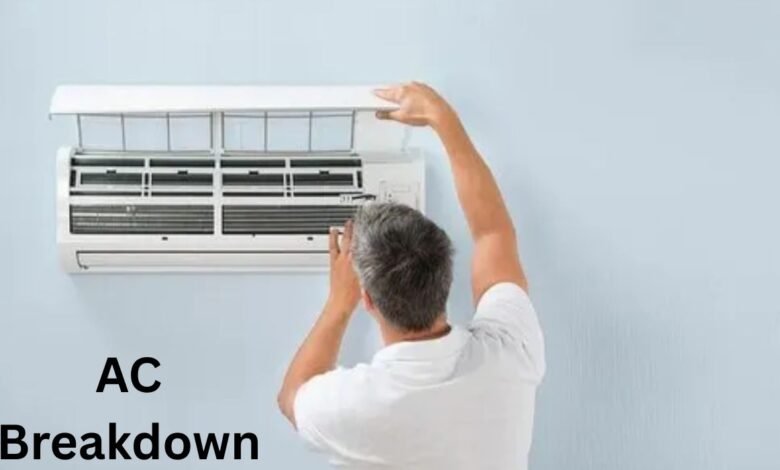
An AC Breakdown can happen at the worst possible time, particularly during very hot weather when a working air conditioner is essential for indoor comfort. An air conditioner may suddenly stop running, blow warm air, make unusual sounds, leak water, or struggle to maintain the temperature set on the thermostat. These problems can have several causes, ranging from a dirty filter or blocked airflow to electrical faults, refrigerant issues, damaged components, or normal wear and tear. Understanding the common causes and warning signs can help homeowners respond appropriately and avoid making a small problem worse. While some basic checks can be performed safely at home, more complicated problems should be inspected and repaired by a qualified HVAC professional.
Quick Information Table
| Data Point | Information |
|---|---|
| Main Topic | AC Breakdown |
| Primary Function | Cooling and dehumidifying indoor air |
| Common Symptom | Poor or insufficient cooling |
| Frequent Cause | Restricted airflow |
| Filter Problem | A dirty filter can reduce airflow |
| Electrical Issues | Breakers, wiring, capacitors, or controls may fail |
| Refrigerant Issues | Leaks or incorrect refrigerant levels can affect cooling |
| Airflow Issues | Blocked vents or dirty coils can reduce performance |
| Drainage Issues | A clogged condensate drain can cause water leakage |
| Warning Sign | Unusual noises |
| Warning Sign | Burning or unusual odors |
| Safety Concern | Smoke, sparks, or serious electrical faults |
| Basic Check | Thermostat, filter, vents, and visible outdoor obstructions |
| Professional Service | Needed for complex electrical, refrigerant, and mechanical problems |
| Prevention | Regular maintenance and timely repairs |
1. What Does an AC Breakdown Mean?
An AC Breakdown means an air-conditioning system is no longer operating normally. In some cases, the unit may stop working completely, while in other situations it may continue running but fail to cool the home effectively. Because an air conditioner contains many interconnected parts, the exact reason for a failure can vary considerably. The thermostat, indoor blower, outdoor fan, compressor, coils, electrical controls, drainage system, and refrigerant circuit all play important roles. A problem with one component can affect the performance of the entire system. Therefore, homeowners should focus on identifying the symptoms rather than assuming that every breakdown has the same cause.
2. What Causes an AC Breakdown?
Several problems can cause an air conditioner to stop working properly or lose cooling performance. A dirty or heavily restricted air filter can reduce airflow and make the system work harder. Dirty indoor or outdoor coils can also interfere with normal heat transfer. Electrical components, including capacitors, contactors, wiring, and controls, can develop faults over time. Mechanical components such as motors and fans may also wear out or fail. A blocked condensate drain can cause water to back up, while refrigerant leaks can reduce cooling performance. In older systems, general wear and aging may increase the likelihood of component failure. The exact cause should be identified through proper inspection rather than assumed from a single symptom.
3. What Are the Warning Signs?
An air conditioner does not always fail without warning. Certain changes in performance can indicate that a problem is developing. Weak airflow from vents, rooms that remain warm, unusually long cooling cycles, and frequent starts and stops are examples of possible warning signs. Strange noises should also be taken seriously. Rattling, grinding, buzzing, or squealing sounds may indicate that something inside the system needs attention. Unusual smells can provide another clue, especially if there is a persistent burning odor. Water around the indoor unit is another sign that should not simply be ignored. Addressing these symptoms early may help prevent a minor issue from becoming a more expensive repair.
4. Why Is the AC Running but Not Cooling?
One common AC Breakdown symptom occurs when the system appears to be running but the indoor temperature does not improve. First, check the thermostat to make sure it is set to cooling mode and has an appropriate temperature setting. A heavily restricted filter can reduce airflow and affect cooling. Blocked supply or return vents can create similar problems. If these basic checks do not resolve the issue, the cause may involve dirty coils, refrigerant problems, a malfunctioning fan, or another internal component. Homeowners should not attempt to open sealed refrigerant circuits or repair electrical components without the necessary qualifications. Professional diagnosis is appropriate when the basic checks do not solve the problem.
5. How Can Electrical Problems Cause a Breakdown?
Air conditioners depend on several electrical components to operate. Circuit breakers, wiring, capacitors, contactors, motors, and control components can all develop faults. A single tripped breaker does not necessarily identify the exact cause of a problem, but repeated trips should not be treated as a normal occurrence. Continuously resetting a breaker can be unsafe if an underlying electrical fault is present. Smoke, sparks, melted wiring, or a strong burning smell are particularly important warning signs. If any of these occur, the system should be switched off when it is safe to do so, and a qualified professional should be contacted. Electrical repairs should not be attempted by someone without the appropriate training.
6. Can Refrigerant Problems Cause an AC Breakdown?
Refrigerant is an important part of the air conditioner’s cooling process. If the system develops a refrigerant leak or another problem within the refrigerant circuit, cooling performance can decline. A homeowner may notice that the system runs for long periods but does not sufficiently cool the room. Ice may also form on certain components in some situations. However, low refrigerant should not simply be treated as a routine condition that requires repeated topping up. If the refrigerant level is incorrect, the underlying reason needs to be identified. Refrigerant work should be performed by an appropriately qualified HVAC professional using the correct equipment and procedures.
7. What Does Ice on the AC Mean?
Ice buildup on an air conditioner may seem like evidence that the unit is producing extra cold air, but it can actually indicate a problem. Restricted airflow is one possible contributor. A dirty filter, blocked return air, or another airflow restriction can interfere with normal operation. Refrigerant-related problems can also contribute to freezing in some systems. When substantial ice develops, continuing to run the air conditioner may place additional strain on the equipment. It is better to allow the system to be properly assessed rather than repeatedly removing the ice without addressing its cause. Recurring freezing is a reason to arrange a professional inspection.
8. Why Is Water Leaking From the AC?
Air conditioning systems normally produce condensation while operating, and this moisture must be carried away through the drainage system. If a condensate drain becomes clogged, water may collect around the indoor unit or overflow into surrounding areas. A dirty drain pan or another drainage fault can produce similar symptoms. Water leakage should not automatically be dismissed as normal AC operation. If moisture is accumulating near electrical equipment or causing damage to ceilings, walls, or flooring, the system should be dealt with promptly. A professional can inspect the drain, pan, and related components to determine why the water is not being removed properly.
9. What Do Strange AC Noises and Smells Indicate?
Unexpected sounds or odors can provide useful information about an air conditioner’s condition. A rattling sound may be associated with a loose component, while grinding can indicate mechanical wear. Squealing may occur when a moving component has a problem, and buzzing can sometimes be associated with electrical or mechanical issues. Odors can have different sources as well. A musty smell may be related to moisture, while a burning smell can indicate overheating or an electrical concern. These symptoms cannot provide a definite diagnosis by themselves, but they are useful warning signs. A persistent unusual sound or odor deserves attention rather than being ignored.
10. What Can Homeowners Safely Check?
Before arranging professional service, homeowners can perform a few simple checks without opening the air conditioner. Confirm that the thermostat has power and is set correctly. Check the air filter and replace or clean it according to the manufacturer’s instructions if it is excessively dirty. Make sure supply and return vents are not blocked by furniture, curtains, or other objects. The outdoor unit should also have reasonable clearance from leaves and other debris. If a breaker has tripped, follow appropriate local electrical safety guidance, but do not repeatedly reset it if it trips again. Avoid opening electrical panels or sealed refrigerant components. If the problem remains, professional diagnosis is the safer option.
11. When Should You Call an HVAC Professional?
Professional help is appropriate when the cause of an AC Breakdown is not obvious or when the problem involves electrical, refrigerant, mechanical, or internal components. An HVAC technician can examine the system systematically rather than replacing parts based only on symptoms. The inspection may involve checking airflow, electrical components, coils, motors, drainage, refrigerant-related issues, and other parts of the system. Homeowners should ask what caused the problem and what repair is required. They can also ask whether other components show signs of wear. A proper diagnosis can help prevent unnecessary repairs and reduce the chance of the same problem returning shortly afterward.
12. How Can You Prevent an AC Breakdown?
Preventive maintenance can reduce the likelihood of unexpected air-conditioning problems. Filters should be checked regularly and cleaned or replaced according to the manufacturer’s recommendations. Outdoor equipment should be kept reasonably clear of leaves, dirt, grass, and other debris that can interfere with airflow. Professional maintenance can help identify dirty coils, drainage problems, worn components, and other developing issues. It is also useful to pay attention to changes in cooling performance instead of waiting until the system stops completely. No maintenance routine can guarantee that an air conditioner will never fail, but regular care and early attention can help support reliable operation and potentially prevent avoidable problems.
13. Final Thoughts
An AC Breakdown can result from many different issues, including restricted airflow, dirty components, electrical faults, drainage problems, refrigerant-related issues, mechanical wear, or aging equipment. Recognizing warning signs such as weak cooling, unusual noises, water leakage, ice buildup, repeated shutdowns, and unusual odors can help homeowners respond before a problem becomes more serious. Basic checks involving the thermostat, filter, vents, and visible obstructions can be useful starting points. However, electrical faults, refrigerant work, and complicated mechanical repairs should be handled by qualified professionals. Most importantly, safety should come first. If an air conditioner produces smoke, sparks, or a strong burning smell, or repeatedly trips an electrical breaker, stop using it when safe and seek appropriate professional assistance. Regular maintenance and timely repairs remain practical ways to support dependable AC performance.
Frequently Asked Questions
1. What is an AC Breakdown?
An AC Breakdown occurs when an air-conditioning system stops operating normally or can no longer provide effective cooling. The cause may involve airflow, electrical components, refrigerant, drainage, mechanical parts, or general equipment wear.
2. What are the most common AC Breakdown signs?
Common signs include weak airflow, warm air, unusually long cooling cycles, strange noises, unusual odors, water leakage, ice buildup, frequent shutdowns, and repeated circuit-breaker trips. Because several different faults can produce similar symptoms, a professional inspection may be needed to identify the exact cause.
3. Can a dirty filter cause an AC Breakdown?
A severely dirty filter can restrict airflow and force the air conditioner to work harder. Restricted airflow can reduce cooling performance and may contribute to other operating problems. Checking and maintaining the filter according to the manufacturer’s instructions is an important part of routine AC care.
4. Is an AC Breakdown always an emergency?
No. Some AC problems are inconvenient but not immediately dangerous. However, smoke, sparks, a strong burning odor, exposed electrical damage, or significant water near electrical components can create safety concerns. In such cases, turn the equipment off if it is safe and seek qualified professional assistance.
5. How can I prevent an AC Breakdown?
Regular maintenance is one of the most practical ways to reduce avoidable AC problems. Keep filters maintained, maintain clear airflow around the equipment, monitor unusual sounds and smells, address water leaks promptly, and arrange professional inspections when necessary. Early attention to performance changes can also help identify developing problems before the system stops working completely.